Simulation
Why AI agents need simulations before they enter the real world
The harder part of physical-world AI is not answering a prompt. It is behaving correctly inside a place, with a person, under operational constraints.
Simulation
The harder part of physical-world AI is not answering a prompt. It is behaving correctly inside a place, with a person, under operational constraints.
The problem
A location-based agent has to understand more than user intent. It needs to know where the user is, what objects or zones matter, what has already happened, what policy applies, and what device constraints shape the interaction.
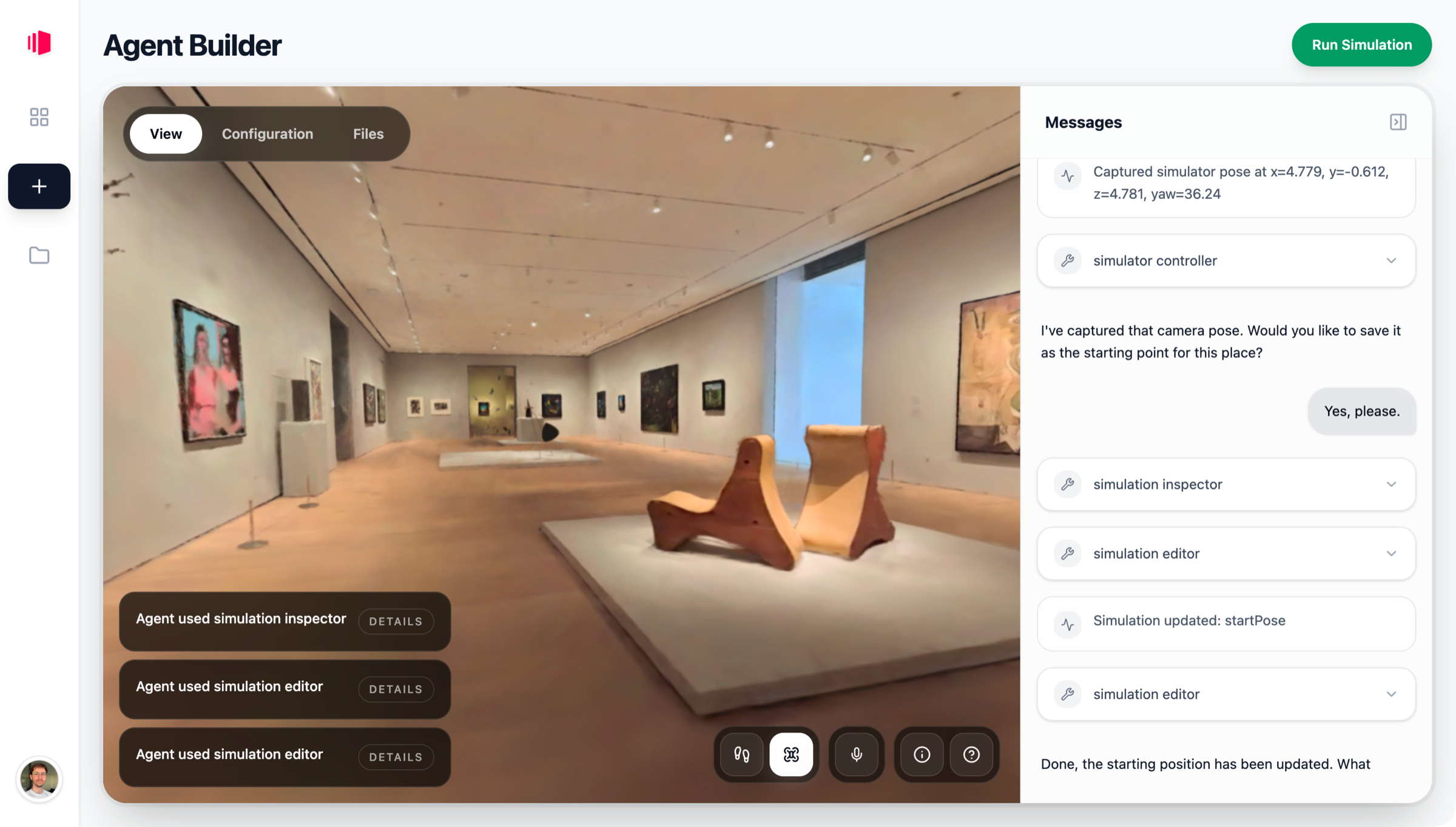
A chat transcript cannot fully test those conditions. A field test can, but field tests are expensive when the behavior is still changing. Simulation fills the gap: teams can create realistic scenarios, run repeatable tests, and find failures before a pilot touches real operations.
That is the purpose of the WorldAgents simulation loop and the Spatial Intelligence Engine: make context part of the build process.
What to test
The model
The simulated place should contain the layout, zones, visual landmarks, and operating constraints that matter to the task.
The test should include the real steps, exceptions, approvals, and handoffs that make the work harder than a scripted demo.
A useful agent behaves differently on a phone, a browser, or AI glasses. Simulation exposes those constraints before field rollout.
Teams need repeatable scenarios, expected outcomes, and failure modes so they can improve behavior instead of relying on anecdotes.
Next step